Dear Members of the BP Plaintiff Steering Committee,
You do not know me, and if it were not for the reckless, reprehensible, violations of British Petroleum regarding the Deepwater Horizon oil disaster, you would not know me. But you will get to know me. 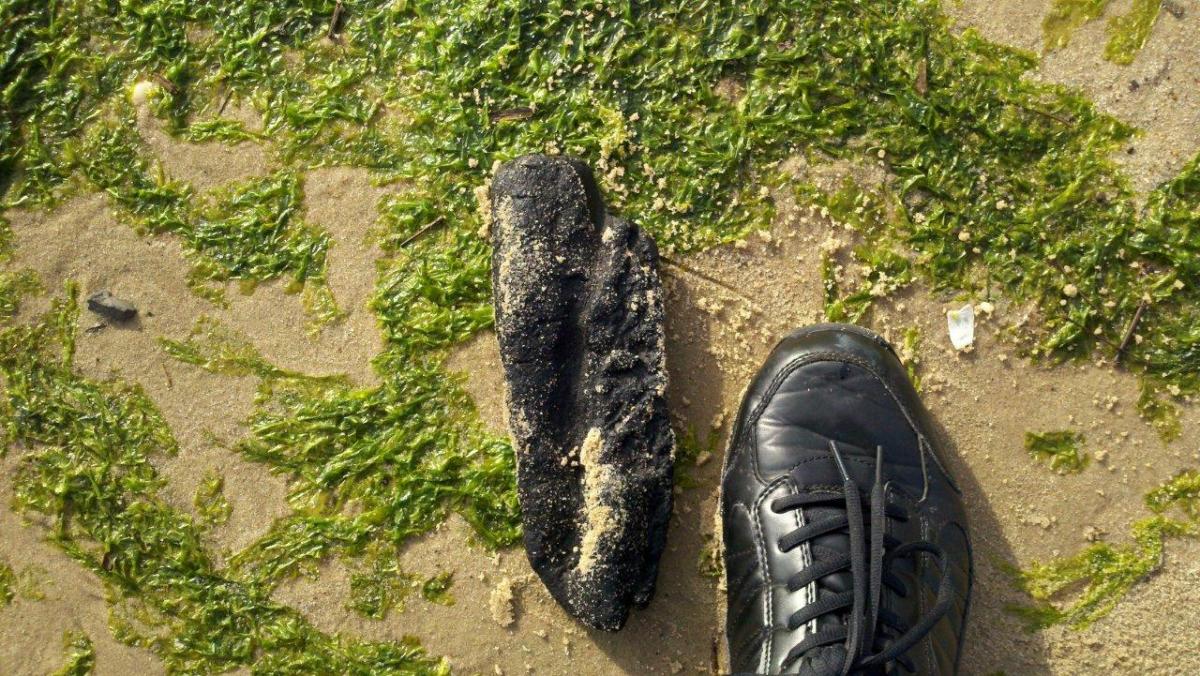

 Four weeks ago I answered a knock on my door. I was surprised when I opened it. There stood a friend, a 56-year-old Houma Indian who has been a crew boat captain for many years. I was surprised as this man very rarely visits my home. I asked him, "how are you?" Then I realized he had tears in his eyes. As he began to speak, tears streamed down his face. He began by saying, "I'm sorry, but I need to tell somebody." He paused to compose himself.
 If you care about the fisheries resource and the traditional fishing communities that rely on them, take the time to read through this article and listen to the audio educational link contained within it (
 Crossposted from
 By Mia White, crossposted from
 Yesterday,
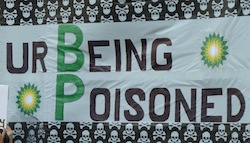 As Midwest and Midsouth communities mourned and regathered from tornados that claimed at least 30 lives and billions in destruction Friday night, Judge Carl Barbier announced a settlement between oil giant BP and thousands of individuals and businesses that lost money due to the Deepwater Horizon oil disaster. BP is estimating that this portion of the settlment will cost a little less than $8 billion.
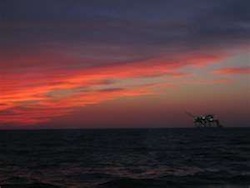 Well, here we are, 675 days since we all awoke to the news that the Deepwater Horizon oil rig had exploded in the Gulf of Mexico. Across the seasons since, we have borne witness to the near silent disaster that has continuously unfolded. It would be a lengthy deposition, were we allowed to take oath and testify to our individual journeys.
 Crossposted from HealthyGulf.org
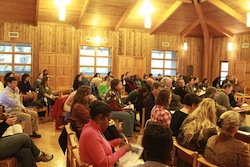 Last week, roughly one hundred Gulf Coast concerned citizens, advocates, environmentalists and scientists came together for the third Gulf Gathering since the first held in October 2010 not long after the BP oil disaster.
 The RESTORE Act passed in the Senate on Thursday. I will never forget the vote: 76-22. We collectively were a part of this victory, with one voice.
 By Ingrid Chapman, crossposted from
 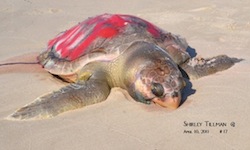 Just to let all my fisherman friends and families know, there will be a meeting in Baton Rouge at the Wildlife and Fisheries building (2000 Quail Dr.) on Thursday March 15th at 10 am, concerning the possible implementation of TEDs (Turtle Excluder Devices) in our inland skimmer nets, also the implementation of an onboard observer program for our vessels.
 As the parent of a New Orleans Public School student I can tell you, the reality of sending your child to school has completely changed from when many of us were growing up. When I was a kid, we went to our local neighborhood schools. In New Orleans, since Hurricane Katrina, just sending your child to the closest school is no longer an option.


 Sometime around 5:30 a.m., on March 1, 2012, an off-duty policeman working for a private